
Why Tree Roots Love Your Sewer Line
Tree roots don't invade sewer pipes randomly. They follow warm moisture and nutrients — exactly what a sewer line provides. Even tiny cracks at pipe joints or slight separations are enough for hair-thin root tendrils to find their way in. Once inside, they feed on the nutrient-rich wastewater and grow rapidly, eventually filling the pipe completely.
In Los Angeles, the problem is amplified by two factors: the region's drought conditions push roots deeper and further in search of water, and the valley's mature urban tree canopy means millions of older homes have large trees planted directly over or adjacent to their sewer laterals.
The Worst Offenders in the San Fernando Valley
Not all trees are equal when it comes to sewer pipe aggression. The most problematic species we encounter in LA:
- Ficus (especially Ficus benjamina and Ficus nitida) — the most aggressive and widespread. Once planted along LA parkways by the thousands, their root systems can extend 50+ feet and exert enormous pressure.
- Liquid amber (sweetgum) — fast-growing, shallow roots that aggressively seek water sources
- Jacaranda — beautiful and everywhere in the SFV; roots can be surprisingly destructive despite the tree's delicate appearance
- Ash and elm trees — common in older neighborhoods, both known for aggressive water-seeking roots
- Bamboo — technically a grass, but its rhizome root system is relentless and can penetrate pipe joints quickly
Most Affected Areas: Sherman Oaks, Encino, Studio City, and North Hollywood have among the highest concentrations of mature ficus trees in the valley — and among the highest rates of root intrusion we see in the field.
What Root Intrusion Does to Your Pipe
Root growth inside a sewer pipe is progressive. It starts as thin tendrils that snag toilet paper and other debris. Over time the roots thicken, creating a dense mass that restricts flow. Eventually the pipe can become completely blocked — causing a sewage backup inside the home. In advanced cases, root pressure cracks or collapses the pipe entirely.
The frustrating part: roots cleared by snaking grow back. Snaking cuts the roots at the pipe wall but leaves the entry point open. Within months — sometimes weeks — new growth returns through the same gaps.
The Right Way to Clear and Fix Root Intrusion
Step 1 — Camera Inspection
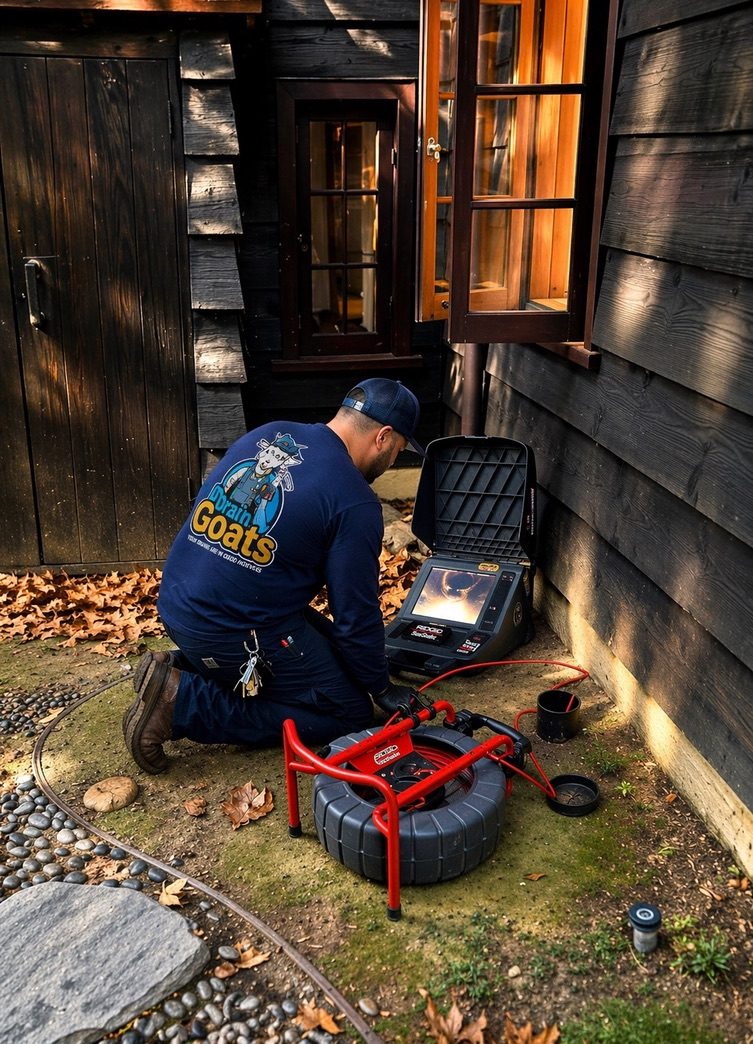
A sewer camera inspection shows us exactly where roots have entered, how dense the intrusion is, and whether the pipe wall itself is cracked or just infiltrated at joints. This determines the right repair approach.
Step 2 — Hydrojetting
Root-cutting hydrojetting nozzles cut the roots flush with the pipe wall and scour the interior clean. This is more thorough than snaking and gives a cleaner surface for any lining work that follows.
Step 3 — Pipe Lining (CIPP)
After hydrojetting, CIPP (Cured-In-Place Pipe) lining installs a seamless epoxy liner inside your existing pipe. This seals all the joint gaps that roots were entering through — creating a smooth, jointless surface roots cannot penetrate. It's the most effective long-term solution for recurring root intrusion without full excavation.
When Full Replacement Is Needed
If the camera shows the pipe is cracked, collapsed, or so deteriorated that a liner won't adhere properly, traditional excavation and replacement is the right call. We'll always tell you honestly which situation you're in.
💡 Prevention: Annual or biennial camera inspections are the best defense if you have large trees near your sewer line. Catching early-stage root intrusion is a $300–500 fix. Waiting until a full backup occurs is a $5,000–15,000 problem.
Dealing with Recurring Drain Clogs in LA?
It might be roots. A camera inspection shows us exactly what's in your line — free with every sewer service call.